
Sutraya
Search ancient texts, then read them in layers.
About
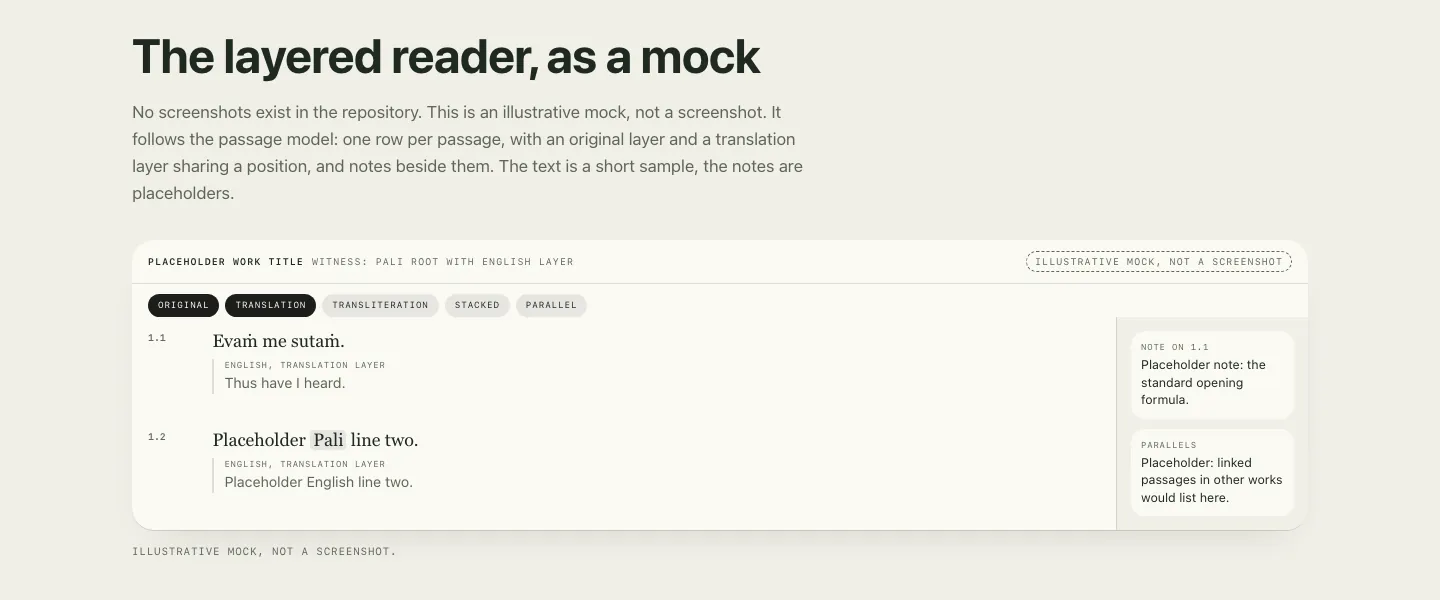
Sutraya is a library for ancient texts. You search first, then open a work in a reader that shows the original text, a transliteration and a translation in aligned layers, with commentary, parallels and footnotes beside them.
Ask answers questions from the library with citations you can follow back to the passage, and checks its own quotes before it shows them. The first corpus is a curated set of Pali root texts from SuttaCentral with Bhikkhu Sujato's English translations, both recorded as CC0. Every text keeps its source and licence on record.
What it does
Search first
Search runs on PostgreSQL with diacritic-insensitive matching, so results work whether or not you type the marks.
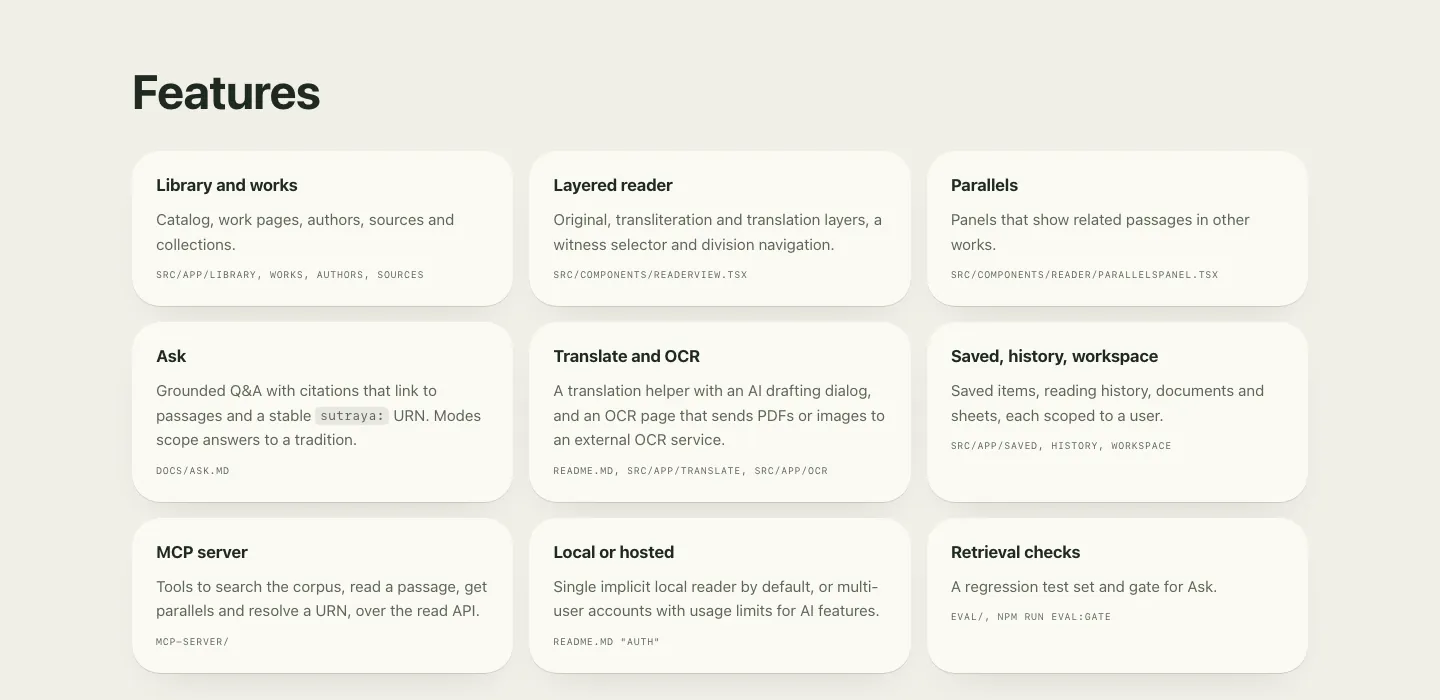
A layered reader
Read the original, a transliteration and a translation together, stacked or in parallel, with notes, parallels and footnote panels.
Ask, with checks
Ask a question and get an answer with citations that link to the passage. Quotes are checked against the text and citations against what was retrieved, then shown with a trust badge.
Provenance for every text
Each text records its source, licence, attribution and import date. The layers of a passage share segment IDs, so they stay aligned.
Translate and OCR
A translation helper with an AI drafting dialog, and an OCR page that sends PDFs or images to Dharmamitra's MITRA OCR.
An MCP server
Tools to search the corpus, read a passage, fetch parallels and resolve a stable sutraya: URN, so other agents can use the library.
The Pitch
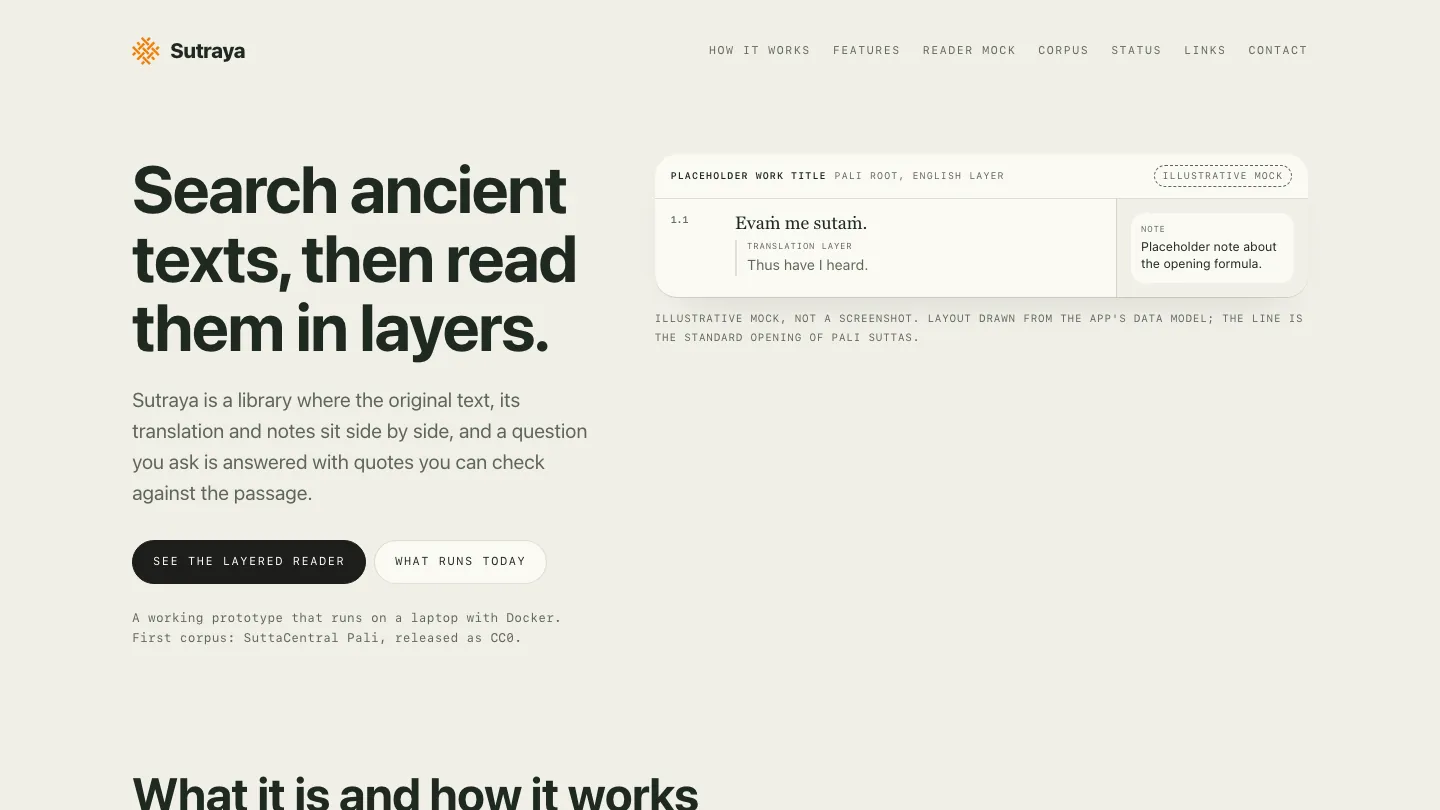
Read the text, not just the answer
Open the demo page to see how the layered reader is organised. The app runs today as a working prototype.
Gallery
Progress
Try it
At a glance
- Status
- Working prototype
- Runs
- On a laptop with Docker, or hosted
- First corpus
- SuttaCentral Pali and English (CC0)
- Stack
- Next.js, TypeScript, PostgreSQL, Drizzle
- Source
- Private repository
Role
Creator.